
"coffee seed structure"
800 article(s) found

Botanical characteristics of small seed Coffee
1. Root coffee is a shallow root crop, and the plant propagated with seeds is a cone root system. From the point of view of varieties, the roots of small and medium grain species are shallow, while those of large grain species are deeper. Yunnan small grain coffee is a 3-year-old 4-year-old fruit tree with a deep main root of about 70cm. The lateral root that grows horizontally from the main root is called the horizontal lateral root, the vertical lateral root grows downward, and the root extracted from the lateral root is called the secondary lateral root.

Colombian Coffee Bean Brand Colombian Strawberry Coffee Bean introduces how to cook and have a cup of wind test.
For many people, when they think of Colombia, they immediately associate the image of coffee, which is the country's connection with crops and beverages. In Colombia, coffee cultivation is also part of the cultural structure, and they even have a theme park dedicated to drinks. Everyone knows that Colombia is a major coffee producer, and most people know that some of the most precious in the world

A brief discussion on the knowledge of Coffee beans Encyclopedia
1. Summary: coffee is a perennial evergreen shrub or small tree of Rubiaceae. It is native to tropical Africa and has been cultivated for more than 2000 years. The Arabs began to grow coffee in 525 BC, and it was popular for Arabs to stir-fry coffee beans. They began to grow coffee beans on a large scale after the 15th century, and were widely distributed in the tropics and subtropics of Europe, Asia, Africa and Latin America after the 18th century.

Coffee beans are important raw materials for making beverages
1. Summary: coffee is a perennial evergreen shrub or small tree of Rubiaceae. It is native to tropical Africa and has been cultivated for more than 2000 years. The Arabs began to grow coffee in 525 BC, and it was popular for Arabs to stir-fry coffee beans. They began to grow coffee beans on a large scale after the 15th century, and were widely distributed in the tropics and subtropics of Europe, Asia, Africa and Latin America after the 18th century.

Introduction to the flavor and taste of Burundian boutique coffee beans in the growing environment.
There are two major ethnic groups in Burundi, and only about 15 percent of the Tutsi have ruled the country since the 16th century, controlling the civilian population, which is mainly made up of Hutu, plus a very small number of indigenous Twa. This abnormal social structure in which ethnic minorities occupy a high position has buried the evil seed of national instability, and in 1

Explanation on the compilation of inspection and quarantine regulations for import and export small coffee beans
1 Overview of small Coffee beans Chinese name: small seed coffee beans, English name: Arabica coffee, scientific name is coffee Arabica Linnaeus. It is the fruit of Arabian species and their varieties. Product character small seed coffee bean is a semi-finished product of coffee fruit after shelling and processing, which can be directly used for drinking after roasting and grinding. 3 the production method will make the coffee fresh with pulp.

What brand of roasted coffee beans are novice roasts? how much is a jin of roasted coffee beans?
Professional coffee knowledge exchange more coffee bean information please follow the coffee workshop (Wechat official account cafe_style) recently there are many players who love roasting, today recommend an introduction to coffee roasting book "Coffee roasting Encyclopedia", which is part of the reference. Europeans first built coffee houses in Syria, Egypt, Turkey and other places in the 16th century.

The growth habits of coffee the distribution of coffee the three main types of coffee
Coffee trees grow in national farms in tropical or subtropical regions known as coffee belts centered at the equator and between latitudes of 25 degrees south and north. At present, coffee is produced in more than 60 countries, widely distributed in South America, Central America, the West Indies, Asia, Africa, Arabia, the South Pacific and Oceania. In terms of output, Brazil, which accounts for the first place in the world, accounts for about 30%; the second

Specifications of coffee beans treatment methods of coffee beans
Water-washed coffee beans have more beautiful color and less impurities. Colombia, Mexico, Guatemala and other countries adopt this method for about 70% of their output. Sometimes in the fermentation process, if not handled properly, it may give off fermentation odor and its unique sour taste, but if handled properly, all kinds of beans can give off their unique coffee aroma. a. Washing type / non-washing type: in

Can coffee powder be brewed directly? How many times can I soak the coffee powder? How do you drink the coffee powder?
Professional coffee knowledge exchange more coffee bean information Please pay attention to the coffee workshop (Wechat official account cafe_style) Coffee is different from tea, it is a seed. Its density is much higher than that of tea, so it cannot be eaten directly, and it needs to be baked at high temperature, which is actually puffing, because only the lignocellulosic structure of extruded coffee beans can be opened.

Coffee knowledge the growth trainee of coffee trees
Coffee trees belong to the evergreen family of Akanaceae. They are tropical plants that are not cold. Most of them are planted in areas with elevations of 300,400m, and also in highlands with elevations of 2000-2500 meters. But those who plant on slopes above 1500 meters above sea level have better quality. Coffee trees are most suitable for growth when the average temperature is about 20 degrees Celsius, the annual precipitation is 1500-2000 mm, and the soil is permeable.
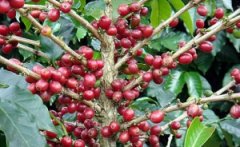
[coffee encyclopedia] # from seed to cup # the first season has nothing to do with coffee, just talk about it for a lifetime
I originally wanted to write an article called from seed to cup, but later I found that there were too many articles in the coffee. Also, a small red fruit for several years, the harvest and processing of farmers, across the ocean. The fine processing distributed to local bakers and the careful cooking of baristas is a story in itself. Let's talk about coffee beans in the first season, from our cup.
Characteristics of small-grained coffee trees
Coffee is a shallow root crop, and the plants propagated by seeds are conic roots. From the point of view of varieties, the roots of small and medium grain species are shallow, while those of large grain species are deeper. Yunnan small grain coffee is a 3-year-old 4-year-old fruit tree with a deep main root of about 70cm.

Botanical characteristics of small seed Coffee characteristics of Coffee in Yunnan
1. Root coffee is a shallow root crop, and the plant propagated with seeds is a cone root system. From the point of view of varieties, the roots of small and medium grain species are shallow, while those of large grain species are deeper. Yunnan small grain coffee is a 3-year-old 4-year-old fruit tree with a deep main root of about 70cm. The lateral root that grows horizontally from the main root is called the horizontal lateral root, the vertical lateral root grows downward, and the root extracted from the lateral root is called the secondary lateral root.

Botanical characteristics of small seed Coffee Coffee shallow Root crops
1. Root coffee is a shallow root crop, and the plant propagated with seeds is a cone root system. From the point of view of varieties, the roots of small and medium grain species are shallow, while those of large grain species are deeper. Yunnan small grain coffee is a 3-year-old 4-year-old fruit tree with a deep main root of about 70cm. The lateral root that grows horizontally from the main root is called the horizontal lateral root, the vertical lateral root grows downward, and the root extracted from the lateral root is called the secondary lateral root.
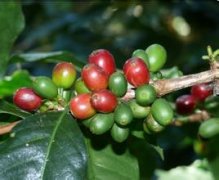
A brief talk on the basic knowledge of Fine Coffee with Coffee beans
1. Summary: coffee is a perennial evergreen shrub or small tree of Rubiaceae. It is native to tropical Africa and has been cultivated for more than 2000 years. The Arabs began to grow coffee in 525 BC, and it was popular for Arabs to stir-fry coffee beans. They began to grow coffee beans on a large scale after the 15th century, and were widely distributed in the tropics and subtropics of Europe, Asia, Africa and Latin America after the 18th century.

Introduction to the Flavor and Taste characteristics of Burundian Coffee Manor
There are two major ethnic groups in Burundi, and only about 15 percent of the Tutsi have ruled the country since the 16th century, controlling the civilian population, which is mainly made up of Hutu, plus a very small number of indigenous Twa. This abnormal social structure in which ethnic minorities occupy a high position has buried the evil seed of national instability, and in 1

Coffee flavor is most affected by the factor "mercaptan" to create deep-roasted and light-roasted coffee beans.
Boutique coffee (specialty coffee) is also called specialty coffee selection coffee. It refers to coffee made from a small number of raw beans with excellent taste grown in an ideal geographical environment. Depending on the special soil and climatic conditions in which they grow, they have outstanding flavor. After strict selection and classification, this kind of coffee is hard in texture, rich in taste and stylish.

Study on the chemistry of small grain coffee in Yunnan, Kunming Institute of plants, Chinese Academy of Sciences
Professional coffee knowledge exchange more coffee bean information Please pay attention to coffee workshop (Wechat official account cafe_style) Coffee as one of the most popular beverages in the world, its composition and physiological function have always been the focus of scientists all over the world. As the largest emerging coffee consumption market in the world, China has not only attracted the attention of a large number of investors, but also promoted the characteristics of agriculture in Yunnan Plateau.
Explain the knowledge of coffee beans for you.
Small and round dark brown coffee beans, quietly emitting a fragrant fragrance in the grinder, injected into the cup showing the beautiful color of amber, these are the three very deep impressions of coffee.